Access for a sewer reline
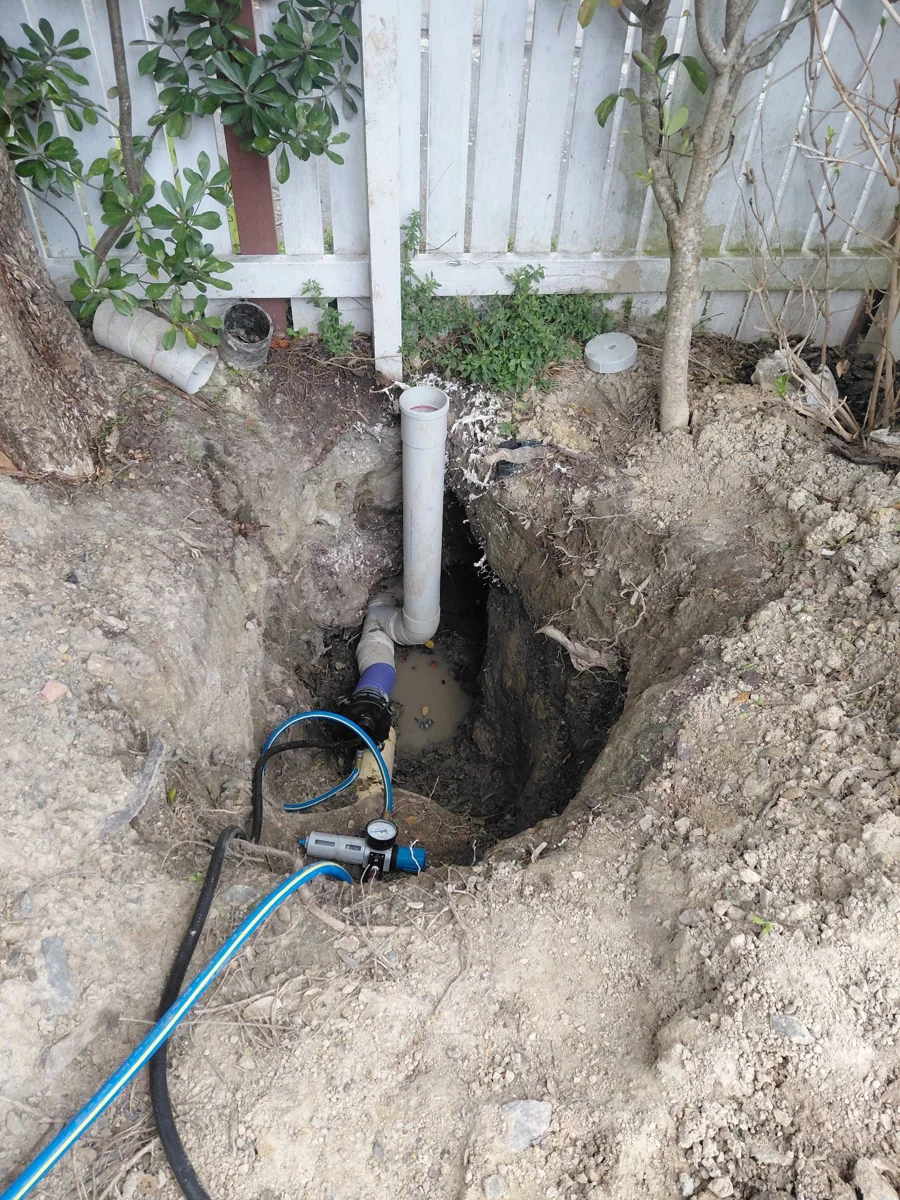
A local access excavation with pipework, hoses and equipment in place during a sewer-relining job in Khandallah.
See the Khandallah job example →
Discuss your drain: 021381382 →Before digging up your driveway, find out whether the drain can be repaired from the inside. Relining is an option for suitable damaged pipes—not a fix for every fault.
Clearing a blockage may restore flow without fixing the underlying fault. A CCTV assessment can help distinguish roots or damaged joints from other causes. Relining may be suitable if the pipe's condition allows it.
What to ask for in a CCTV inspection →
Call to discuss your drain →General guidance only. A site assessment is needed before recommending a repair.
Drain relining repairs a suitable existing pipe by installing a new lining inside it. You may also hear it called pipe relining or sleeving. It is a trenchless repair approach: it can avoid digging along the whole pipe route, but local access excavation may still be needed.
A CCTV inspection identifies the pipe layout, access and visible defects. The first question is whether the existing drain is suitable for lining.
Compare relining with excavation or a targeted repair. Confirm the scope, access work, disruption and price before approving the job.
For a suitable drain, clean and prepare the pipe, then install and cure a new internal lining using the selected repair system.
Inspect the completed repair with CCTV. Confirm the handover information and written warranty terms for the specified installation.
Length, diameter, condition, preparation and access all affect the price. A site-specific assessment is needed for a meaningful quote. Compare the full repair cost, including any digging and reinstatement. See what to check in a quote.
Not always. Relining may avoid excavating the entire route, but localised digging can still be needed for access or unsuitable sections. The proposed scope should make that clear.
It depends on the preparation, lining system and curing time. Ask for a job-specific programme and clear advice on when connected fixtures can be used again.
Product and installation warranties depend on the system and written terms. Ask for the specific product and installation terms with your quote.
We focus on domestic drains in Wellington. Call with your suburb to confirm service availability.
Preparation and access work from three local relining jobs. Tap a photo to see it in full. Local excavation may still be needed.
A local access excavation with pipework, hoses and equipment in place during a sewer-relining job in Khandallah.
See the Khandallah job example →
Discuss your drain: 021381382 →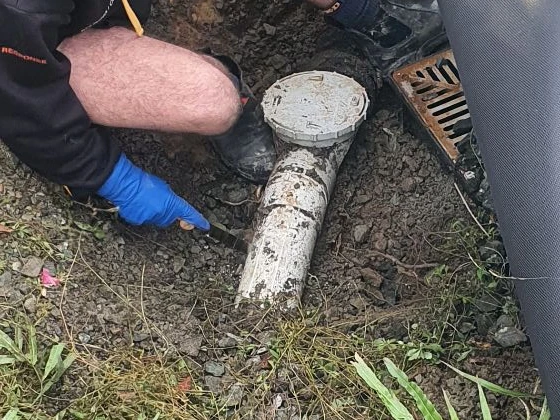
Exposed pipework and access preparation during a sewer-relining job in Wadestown.
The matching invoice describes a DN100 structural liner for a 100 mm sewer drain between two PVC cleaning eyes (drain access points). Its scope includes cleaning, pre-lining CCTV, curing the liner in place, finishing the ends, final CCTV and water-testing.
These are the recorded specification and checks in the scope, not published test results. The access photograph does not show the inside of the finished liner.
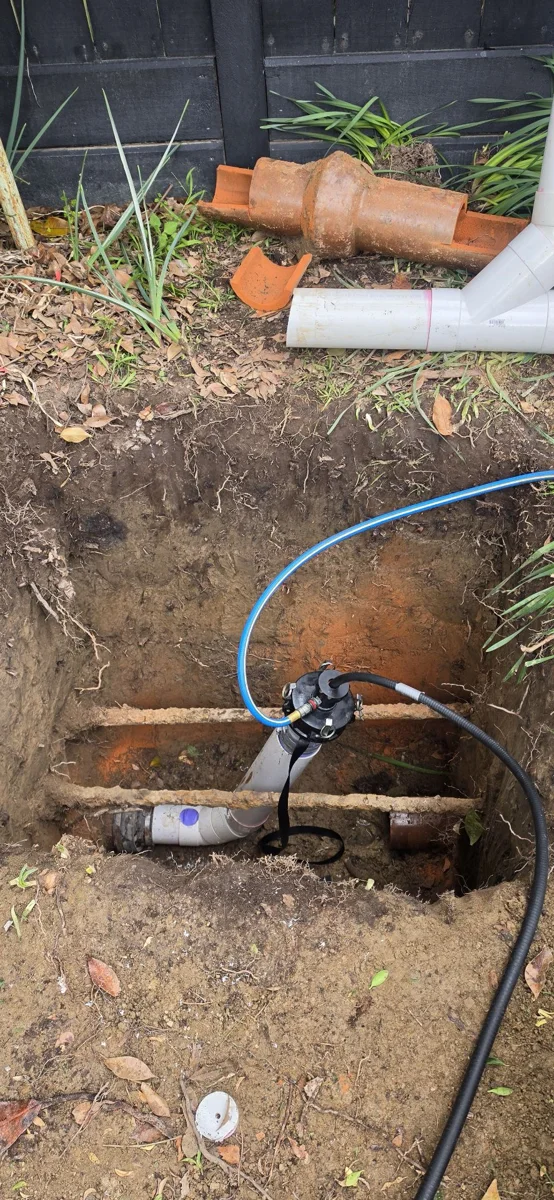
Pipework and connected equipment at a local access excavation on a Waterloo drain-relining job.
The linked inspection record describes root intrusion and cracks beneath the fence. The completion invoice records that 4 metres of drain beneath the fence were relined, and a root blockage on the council side was flushed out.
The council-side blockage clearance was separate from the relined section. This access photograph is not a post-repair CCTV result.
A Te Marua drain investigation identified root intrusion and damaged pipework. The completed-work record documents 19 metres of drain relining and a separate one-metre pipe repair.
Job-linked CCTV includes the original intrusion and later views of a lined section transitioning to existing pipe.
These CCTV observations relate to the reviewed sections, not proof that the entire drain is defect-free. The original and later views have not been confirmed as the exact same survey location, and are not a technical acceptance result.
Text-only case notes. The photographs above show other jobs, not this Te Marua drain.
What should a quote include? When is digging the better option? Start with these practical guides before choosing a repair.
Tell us what you've noticed and where the pipe runs. If you already have a camera report, mention it when you call.
You do not need to know which repair you need. Start with:
Not sure what to say? “I’m in [suburb]. The drain was last cleared [when], and the problem returned [when]. I have / don’t have a camera report.” Approximate dates are fine.
A site assessment is needed before recommending a repair. Ask about assessment charges and what information you will receive before booking.
Call 021381382Enquiries are by phone. This website does not take online bookings.
We use optional Google Analytics to understand visits to this website and taps on our call buttons. It loads only if you allow it. It uses cookies and sends page, device and interaction information to Google, which may process it overseas. We do not enable advertising personalisation or send customer names, email addresses or job details through this tracking.
A call-button tap does not tell us whether a call connected or resulted in work. Declining analytics does not affect the website or your ability to call us. We store your choice in this browser; you can change it here at any time. Switching analytics off removes this site's Analytics cookies from your browser but does not erase information already sent.
For privacy questions, or to discuss access to or correction of information you have given us, call 021381382. See Google's privacy policy.
Optional analytics: off.